
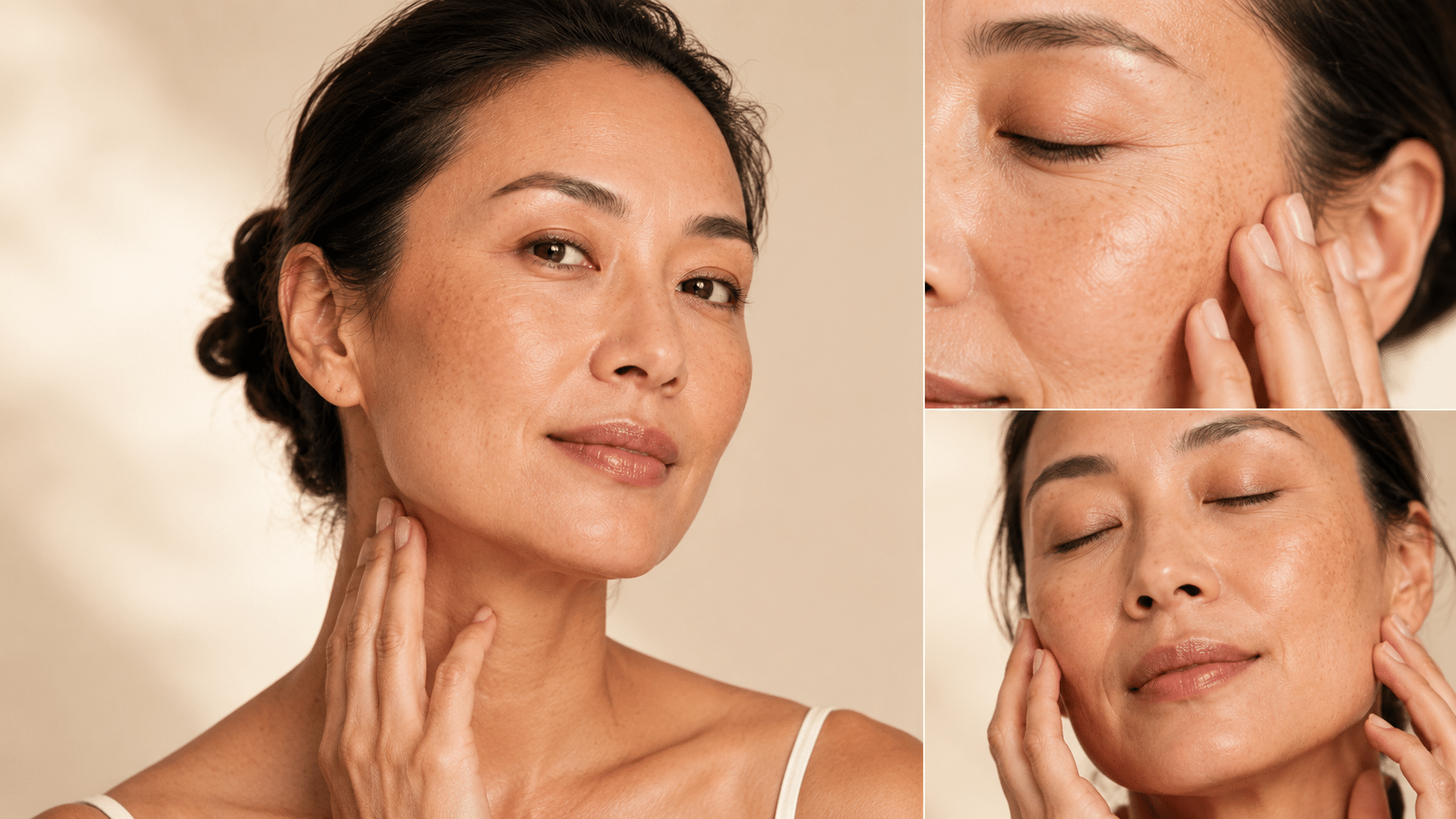
The language used in aesthetic skincare can become confusing very quickly.
Skin tightening. Resurfacing. Rejuvenation. Lifting. Collagen stimulation. Brightening.
These phrases often appear beside one another, which can make them sound as though they describe the same thing.
They do not.
Someone concerned about loose skin along the jawline has a different problem from someone concerned about acne scars. Someone with sun-damaged skin may have a different priority again.
Understanding these categories makes it easier to have a productive consultation and prevents a common mistake: selecting a treatment because its name sounds impressive rather than because it addresses the problem you actually want to improve.
Start With the Concern, Not the Treatment
When researching aesthetic options, people often begin with a device.
They may ask:
- Should I get Ultherapy?
- Should I get RF microneedling?
- Do I need CO₂?
- Is laser better than radiofrequency?
Those questions are understandable, but they begin in the wrong place.
A more useful starting point is:
What specifically do I want to change?
For example:
- loose skin
- fine lines
- rough texture
- acne scars
- enlarged pores
- pigmentation
- redness
- loss of definition
- dullness
Once the concern is clear, treatment categories become easier to understand.
What Is Skin Tightening?
Skin tightening generally refers to treatment strategies aimed at improving the appearance of skin laxity.
Laxity means the skin has become less firm or less supported than it once was.
People may notice this around areas such as:
- jawline
- lower face
- neck
- under the chin
- cheeks
- brows
- body
Ageing is complex. Changes can occur in skin, collagen, fat compartments and deeper facial structures.
For that reason, “tightening” does not mean every feature of facial ageing can be corrected by one procedure.
Non-surgical tightening treatments are generally best understood as tools for selected degrees and patterns of laxity rather than replacements for every surgical procedure.
What Is Ultherapy?
One example of a tightening-focused technology is ULTHERAPY.
Rather than resurfacing the outermost skin, Ultherapy uses focused ultrasound energy at targeted depths.
This is an important conceptual difference.
Someone whose main concern is laxity may be discussing a deeper tightening strategy rather than a surface-texture strategy.
That does not mean Ultherapy is automatically the correct choice for everyone with loose skin.
The amount and location of laxity, age, anatomy, expectations and previous treatments all matter.
What Is Radiofrequency Skin Tightening?
Radiofrequency is another energy category used in aesthetic treatment.
Different RF devices are designed differently, so “radiofrequency” should not be treated as one identical procedure.
Arion’s service menu includes technologies such as EXILIS ULTRA™, THERMISMOOTH®, ACCENT™ RADIOFREQUENCY (RF) and radiofrequency-based microneedling.
Their intended applications and delivery methods differ.
This is why asking simply “Is RF good?” is too broad.
A better question is:
Which RF technology is being recommended for my concern, what tissue is it intended to target, and what result should I reasonably expect?
What Is Skin Resurfacing?
Resurfacing is different from tightening.
Resurfacing focuses more directly on aspects of skin texture and surface quality.
People commonly research resurfacing because of concerns such as:
- acne scars
- rough texture
- fine lines
- uneven tone
- photodamage
- enlarged pores
- certain superficial irregularities
Resurfacing can range considerably in intensity.
Some approaches are relatively gentle, while others create a more significant controlled treatment response and therefore involve greater downtime.
This is why “resurfacing” alone does not tell you how intensive a treatment will be.
Where Does CO₂ Laser Resurfacing Fit?
CO₂ Laser Resurfacing (eCO2 Plus) is an example of a resurfacing-oriented option available at Arion.
CO₂ technologies are different from non-ablative tightening procedures.
A person comparing CO₂ resurfacing directly with a tightening procedure may therefore be comparing two treatments intended to address different primary problems.
If someone’s main concern is significant texture irregularity, resurfacing may be part of the discussion.
If the main concern is laxity along the lower face, an entirely different strategy may be more logical.
If both are present, treatment planning may involve more than one category rather than trying to force a single procedure to accomplish everything.
What Is Pixel RF Plasma Resurfacing?
Another service in Arion’s treatment portfolio is Pixel RF Plasma Resurfacing.
Again, the important word for the consumer is “resurfacing.”
When comparing treatments, look beyond brand names and ask what category the treatment belongs to and what skin concern it is designed to address.
This prevents misleading comparisons such as:
“Which is better, resurfacing or tightening?”
Neither is inherently better.
They are solving different problems.
What Is Skin Rejuvenation?
“Skin rejuvenation” is the broadest of these terms.
It can describe treatments intended to improve the overall appearance or quality of the skin.
Depending on the context, rejuvenation may involve concerns such as:
- brightness
- hydration
- texture
- fine lines
- pigmentation
- collagen support
- overall tone
Because it is such a broad phrase, consumers should ask for clarification whenever it is used.
A “rejuvenation treatment” could mean a gentle facial, an energy-based procedure, an injectable treatment or another approach entirely.
The treatment name matters less than understanding what it is expected to do.
What Is Collagen Stimulation?
Collagen stimulation is another phrase frequently used across aesthetic treatments.
Collagen is an important structural protein within the skin.
Various procedures are designed to create controlled stimulation intended to support remodelling processes.
But “stimulates collagen” does not make all collagen-stimulating procedures equivalent.
Depth, energy, delivery method, treatment area and indication all vary.
For example, RF Microneedling (INFINI) combines microneedling with radiofrequency and may be discussed for texture and collagen-remodelling concerns.
A focused-ultrasound treatment and RF microneedling may both be discussed in relation to collagen, yet their treatment strategy is not identical.
Can a Treatment Do More Than One Thing?
Yes.
The categories overlap.
A treatment primarily associated with texture may also affect aspects of firmness.
A tightening treatment may contribute to an overall rejuvenated appearance.
A pigment-focused procedure can make the complexion appear brighter.
That overlap is why marketing descriptions can become confusing.
The key is identifying the primary purpose of the treatment for your individual case.
Ask:
- What is this treatment best at?
- What is it less effective at?
- Which of my concerns is it expected to improve?
- Which concerns will likely remain?
Those questions create much more realistic expectations.
If My Main Concern Is Loose Skin, What Should I Research?
Start by considering where the laxity appears.
Is it primarily:
- under the chin?
- along the jawline?
- on the neck?
- around the brows?
- on the cheeks?
- on the body?
Then consider degree.
Very mild early laxity is different from substantial excess skin.
Non-surgical treatments generally have practical limitations, and those limitations should be part of the consultation.
Depending on the assessment, options such as ULTHERAPY, EXILIS ULTRA™ or THERMISMOOTH® may enter the conversation.
The goal should be an appropriate recommendation, not simply whichever technology is newest.
If My Main Concern Is Acne Scarring, What Should I Research?
If the issue is indented acne scarring or uneven texture, a resurfacing or remodelling discussion is usually more relevant than a generic tightening discussion.
Depending on the scar pattern and skin assessment, treatments such as RF Microneedling (INFINI), Pixel RF Plasma Resurfacing, SUBLATIVE (E-MATRIX) or CO₂ Laser Resurfacing (eCO2 Plus) may be considered.
Scar type matters.
There is no reason to assume that every acne scar should receive the same treatment.
If My Main Concern Is Dull Skin, Do I Need Tightening?
Not necessarily.
Dullness can arise from factors unrelated to laxity, including:
- dryness
- surface buildup
- uneven pigmentation
- lifestyle factors
- irritation
- inconsistent skincare
Someone in their twenties with dull, dehydrated skin may have little reason to begin by researching a deep skin-tightening procedure.
This illustrates why broad searches such as “best anti-ageing treatment” are often less useful than defining the concern first.
What If I Have Several Concerns at Once?
Most adults do.
Someone may simultaneously have:
- mild lower-face laxity
- sunspots
- enlarged pores
- fine lines
- old acne scars
That does not mean everything needs to be treated at once.
A staged plan can prioritise concerns.
For example:
- identify the concern that bothers you most
- establish realistic goals
- address skin health and active problems
- select the most appropriate treatment category
- reassess before adding another procedure
This is often more logical than stacking multiple treatments simply because each promises a different benefit.
How Much Downtime Can You Accept?
Downtime is an important part of treatment selection.
Some people are comfortable with several days of visible recovery.
Others need to return to client meetings, work or social commitments quickly.
A procedure can be effective but still be a poor practical choice if its recovery does not fit your schedule.
Ask about:
- redness
- swelling
- peeling
- sensitivity
- makeup restrictions
- exercise restrictions
- sun exposure
- expected progression of recovery
Do this before booking, not the day of treatment.
How Quickly Should Results Appear?
Different treatment mechanisms also work on different timelines.
Some surface changes may become noticeable relatively quickly.
Treatments involving remodelling processes may develop more gradually.
Results can also vary between individuals.
Be cautious about evaluating every procedure through before-and-after images taken at dramatically different time points.
Ask when the practitioner normally evaluates the result and whether multiple sessions are commonly considered.
Is Stronger Always Better?
No.
The most aggressive treatment is not automatically the most appropriate treatment.
Treatment intensity needs to be balanced against:
- the concern
- skin type
- recovery tolerance
- medical history
- risk of pigmentation changes
- previous treatments
- expected benefit
A conservative treatment that matches the problem may be a better choice than an intensive treatment selected simply because it sounds more powerful.
Five Questions to Ask Before Choosing a Treatment
1. What is the main problem we are treating?
The answer should be specific.
“Ageing” is broad.
“Early jawline laxity” or “atrophic acne scarring on the cheeks” is much more useful.
2. Is the treatment primarily tightening, resurfacing or rejuvenating?
This helps you understand its role.
3. What will it probably not improve?
This is one of the most valuable questions you can ask.
4. What downtime should I expect?
Know how treatment fits your real life.
5. What would make me a poor candidate?
Good treatment planning includes reasons not to perform a procedure.
The Bottom Line
Skin tightening, resurfacing and rejuvenation are related concepts, but they are not interchangeable.
A simple way to remember the distinction is:
Tightening: primarily concerned with laxity and firmness.
Resurfacing: primarily concerned with texture and surface irregularity.
Rejuvenation: a broader category describing improvement in overall skin quality or appearance.
Treatments can overlap between categories, but their primary functions still matter.
For Vancouver clients comparing options such as ULTHERAPY, RF Microneedling (INFINI), EXILIS ULTRA™, THERMISMOOTH®, Pixel RF Plasma Resurfacing or CO₂ Laser Resurfacing (eCO2 Plus), the most useful first step is not deciding which machine is “best.”
It is identifying the exact concern you want to improve.
Once the problem is clearly defined, the technology becomes much easier to understand.